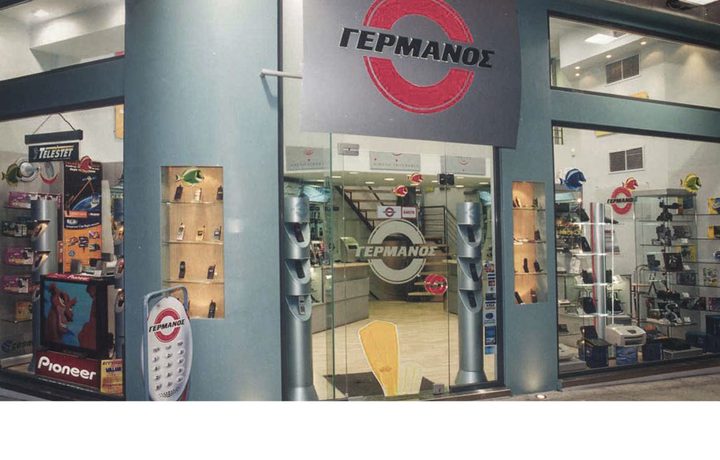



He began his entrepreneurial career in 1980, opening a small 7 sq.m. shop on Emmanouel Benaki Street in central Athens, specialising in specialty batteries for the electronic devices that were just beginning to enter everyday life. The store was very well received by consumers, primarily due to a different approach to customer service and the provision of technical support for minor device issues. This was the first sign that such stores could succeed across every corner of Greece.
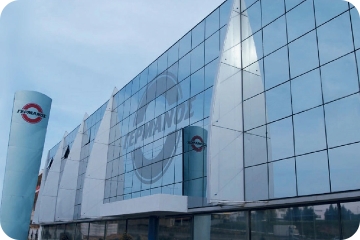
The question then arose: how to replicate that quality across many locations. After much experimentation, he adopted the franchise model, adapted to its specific requirements. The 1980s were almost entirely devoted to this effort. By the end of the decade, a network of 40 stores had been established, staffed by young, independent, motivated, and well-trained people. This small network became the foundation of the GERMANOS BATTERIES stores, which built uniquely strong relationships of trust with their customers.
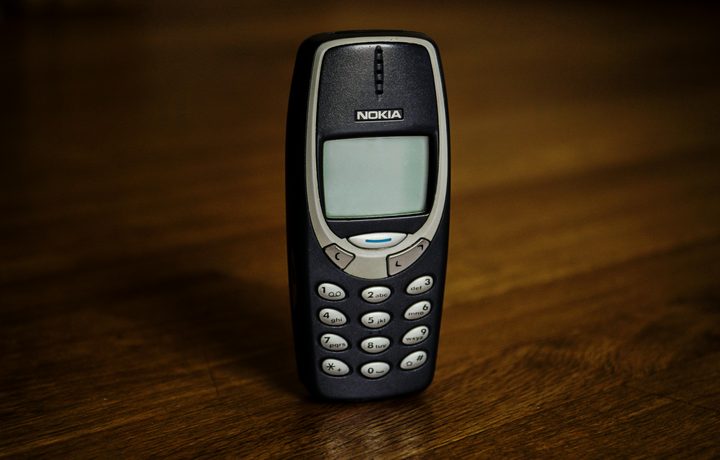
In the following decade, and particularly from 1994 onwards, mobile telephony began making a dynamic entry into everyday life. The GERMANOS BATTERIES network quickly proved to be the ideal point of sale for mobile products, subscriptions, and services. Panos Germanos recognised the opportunity to enter a market that would be hundreds of times larger than the specialised batteries sector. Radical strategic decisions followed: the network would be dedicated exclusively to mobile telephony and would move quickly, before the entire industry realised that specialisation, service, and customer trust were decisive success factors. A necessary prerequisite was a large number of franchise stores with a recognisable identity and consistent quality, as both the products and services were entirely new to consumers.
Achieving this goal required a fundamental organisational transformation, a different calibre of people, and additional capital. In other words, a very small company had to be transformed into a large one and this carried considerable risk.
Panos Germanos undertook that risk and made the decision to shed the GERMANOS brand’s long association with batteries, something that was far from easy. At the same time, he disengaged from other business activities he had developed in the Balkans, freeing up human and financial resources and energy.
Within four years, the number of stores grew from 40 to over 400, with the GERMANOS brand now fully identified with mobile telephony. Sales exceeded expectations, and surveys showed that the network was the number one choice of 78% of Greek consumers for mobile telephony, while approximately one third of all new subscribers gained access to mobile services through GERMANOS stores.
In 2000, GERMANOS was successfully listed on the Athens Stock Exchange, raising over €200 million for further expansion, now firmly oriented toward mobile telephony both inside and outside Greece.
International expansion followed, with the creation of more than 1,000 stores outside Greece within three years. At the same time, Panos Germanos was conducting in-depth research into which markets in Eastern Europe and Central Asia offered opportunities for expansion in mobile telephony from the role of provider. In 2004, he acquired mobile telephony companies in Uzbekistan and Cyprus.
The sale of GERMANOS to Cosmote followed in 2006, an extremely successful move for both sides. It provided the momentum and capital for Panos Germanos to move even more dynamically in mobile telephony as a provider, while giving Cosmote a dominant position in mobile retail, with modern store networks in its markets of operation and a strong executive team.
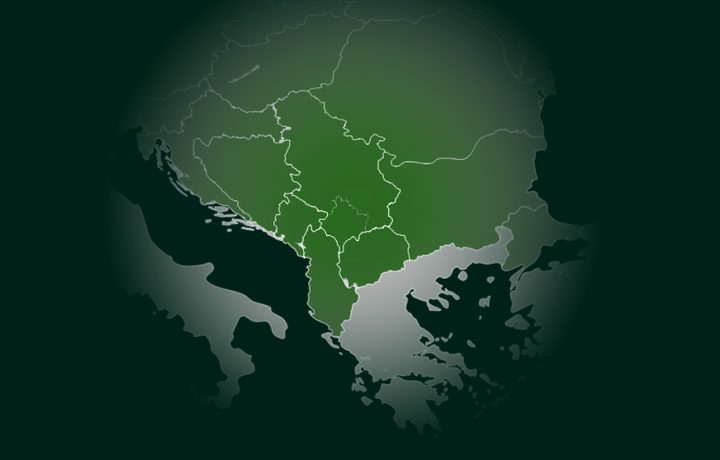
His first experiences as a provider in Uzbekistan and Cyprus, combined with extensive research, led to a bolder strategic choice: now with the required capital, he would enter, as the fourth operator, a larger and more mature market: Poland.
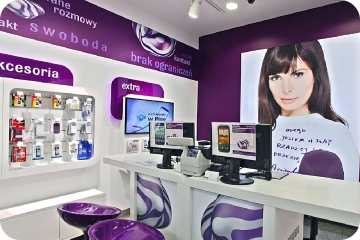
This decision was grounded in the observation that, despite strong competition, customer service quality in Poland was extremely low. Having already built 500 stores in Poland that had earned consumer trust, he undertook the challenge of creating a mobile telephony company from scratch, in cooperation with NOVATOR, which already held the necessary licence. That company was Play.
What followed was a global exception: no new entrant entering a mature market in fourth position had ever managed to capture more than 10–12% market share. Play not only survived, within 10 years it became the market leader, with a share exceeding one third and over 15 million customers. In 2017, Play was listed on the stock exchange in one of the largest telecom IPOs in Europe. In 2020, it was sold to French group Iliad at a valuation of €3.5 billion.
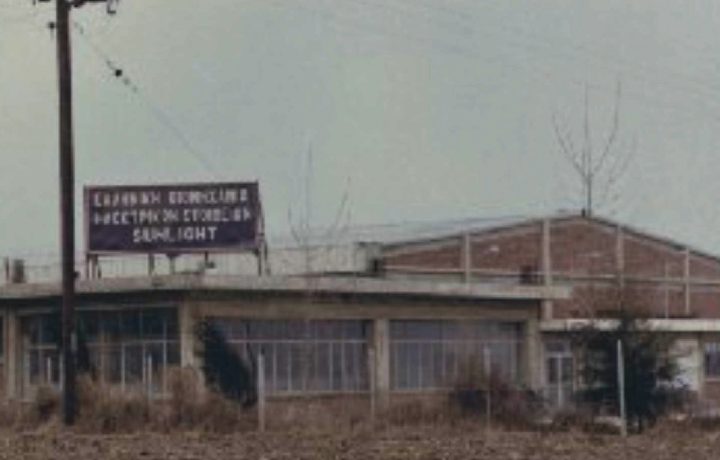
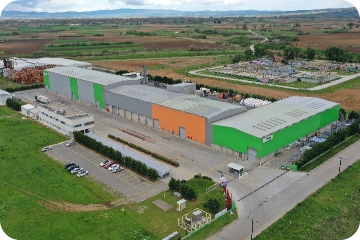
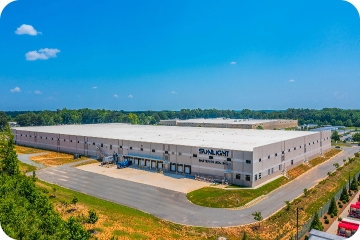
Batteries never ceased to be a strategic priority. Although Panos Germanos had stepped back from the consumer battery segment, his interest in large industrial batteries remained strong. In 1991, he acquired a small factory of 2,000 sq.m. in Nea Olvio, Xanthi, Sunlight. The plant had a niche specialisation in industrial batteries and defence sector applications.
Recognising the capability of Sunlight’s people, he invested in expanding production and focused on critical segments: batteries for electric forklifts and submarines. In both areas he achieved significant success. In the forklift battery market, Sunlight captured a substantial share and, in doing so, reached full production capacity. In the submarine battery segment, it developed the best product in the Western world: today, two thirds of all submarine batteries in the West are equipped by Sunlight.
On 1 May 2018, a catastrophic fire devastated the Xanthi factory, wiping out 97% of the company’s turnover within two hours. The response was immediate and unequivocal: full reconstruction, no redundancies, and regular pay for all employees. Within 18 months, one of the world’s most modern battery manufacturing facilities had risen on the same site.
This marked the beginning of a new era. Sunlight quadrupled its production capacity, expanded internationally through acquisitions and partnerships in Germany, and grew from a company with €150 million in turnover to one exceeding €1 billion today, creating more than 5,000 jobs across Europe and America.
Sunlight leads in batteries for lifting equipment, while pursuing expansion into new sectors such as energy storage and electric mobility in shipping and construction vehicles, cranes, bulldozers.
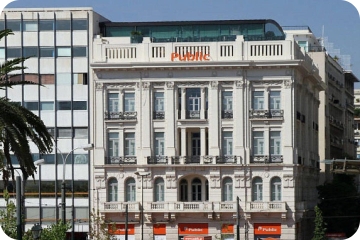
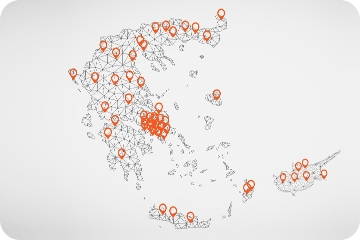
Retail is not a sector. It is a way of thinking. Public was not simply the next business move, it was proof that what Panos Germanos learned while building one of the most recognisable retail brands in the country is not forgotten, but transformed. Public currently operates 63 stores in Greece and Cyprus, employs more than 2,000 people across three product categories, entertainment, technology, and home appliances, and records over 100 million visits (online and physical) per year. In 2022, Panos Germanos made targeted investments to strengthen and expand the Public ecosystem into strategic areas, including Box Now, Svuum, iRepair, Klarna, and Book Voice.
Recognising that technology is reshaping productivity, competitiveness, and growth, Panos Germanos proactively invested in business software through the acquisition of Softone, followed by the acquisition of Entersoft and the merger of the two companies, creating ES, a leader in the enterprise software market.
This move is not simply about developing one more sector; it is about strengthening a broader ecosystem that connects technology with the real economy and creates the conditions for businesses to transition to a more modern and competitive environment.
Panos Germanos has always believed in the value of technocratic executives and has consistently built strong teams, entrusting them with genuine authority and responsibility. In recent years, his focus has increasingly turned to succession planning and ensuring the continuity of businesses beyond any single individual. Central to this are strong teams, effective boards of directors, systematic training, stable shareholding structures, and the implementation of substantive corporate governance practices.
As he himself has noted, his path was more a journey of evolution and learning than a pre-decided ambition. With the same modesty he approached entrepreneurship, not as an end in itself, but as a responsibility: “Since life put me in this position, I have to handle it properly.” He began working at 13, became an entrepreneur at 30, and at every stage kept sight of the bigger picture: people’s needs, the value of service, and quality as a driving force. And although the business world is unforgiving and its demands relentless, his approach has remained consistent: discipline, focus, respect for human limits, and a deep conviction that progress only makes sense when it leaves a positive footprint on society.